Elbphilharmonie

Client
Elbphilharmonie
Project location
Hamburg, Germany
Project date
2016
Architect
Herzog & de Meuron (CH)
Lighting designer
Ulrike Brandi Licht (DE)
Photos
Michael Zapf
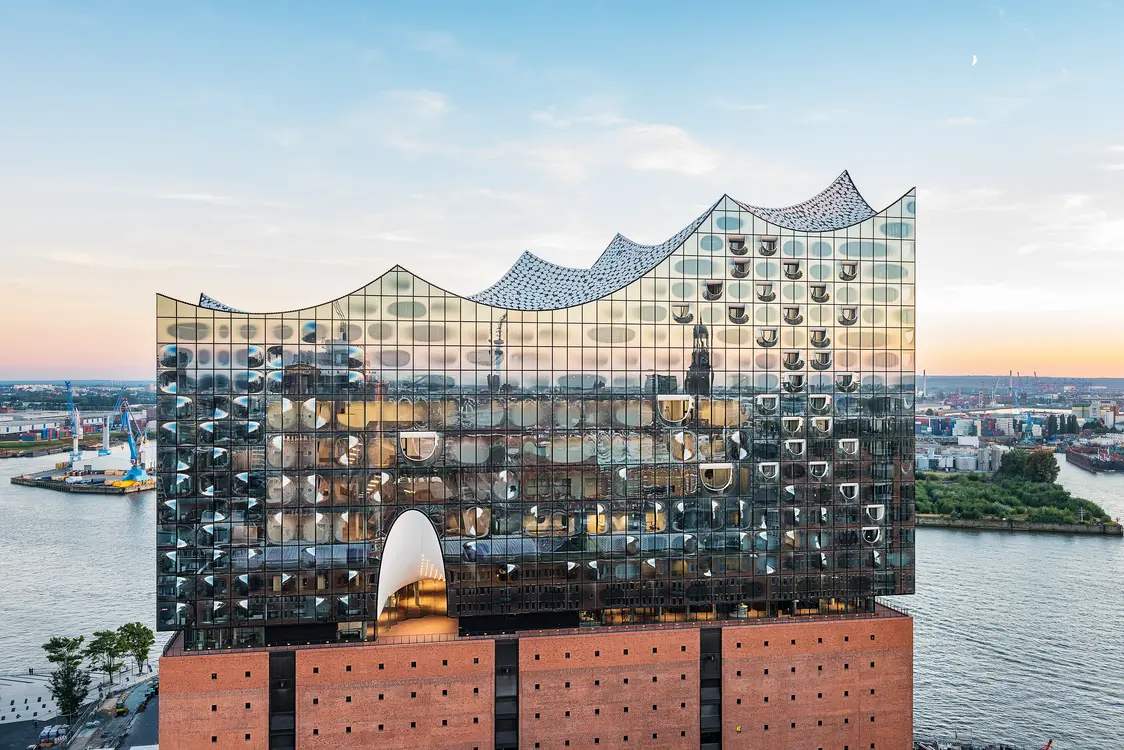
A shining jewel in Hamburg's Hafencity
Exceptional architecture thrives on staging: for Hamburg's Elbphilharmonie, today undoubtedly one of Europe's most famous concert halls, Zumtobel has developed a lighting solution that combines traditional craftsmanship with modern lighting technology. The Austrian lighting specialists have created numerous special luminaires, some of which consist of handmade elements, for the famous landmark in Hamburg's Hafencity, which opened in 2017.
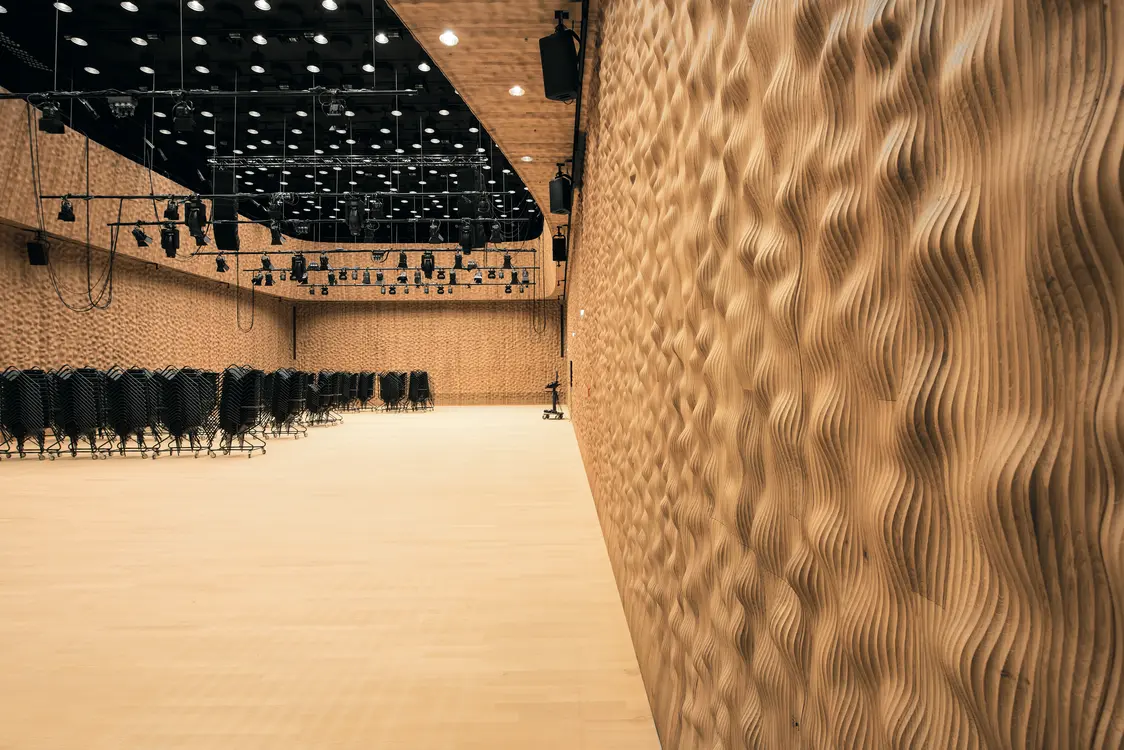
The Elbphilharmonie aims to offer its guests and visitors a "complete artwork of breathtaking architecture, excellent music and a unique location". Equally sophisticated is the special lighting solution for the general lighting in the concert hall: Zumtobel adopts the dominant architecture concept – the fusion of old and new. Around 1,200 mouth-blown glass spherical luminaires were produced in close collaboration with renowned Swiss architects Herzog & de Meuron, lighting designers Ulrike Brandi Licht, Hamburg, and glass designer Detlef Tanz from Wegberg.

Unique lighting solution, connected to time and place
Like light-filled water bubbles, they emerge from the wave-shaped acoustic ceiling of the concert hall – a homage to the building's weather-beaten location on the banks of the Elbe. The body of the luminaire is integrated into the ceiling and invisible to the eye. With a colour temperature of 2700 K, the spherical luminaires create a special light atmosphere in the hall. They can be dimmed using a DMX control system and are HDTV-ready, which means that films can be shown in the concert hall, 100% flicker-free. This combination of traditional craftsmanship and modern LED technology made developing these luminaires a particular challenge for Zumtobel.
Traditional technology meets modern LEDs
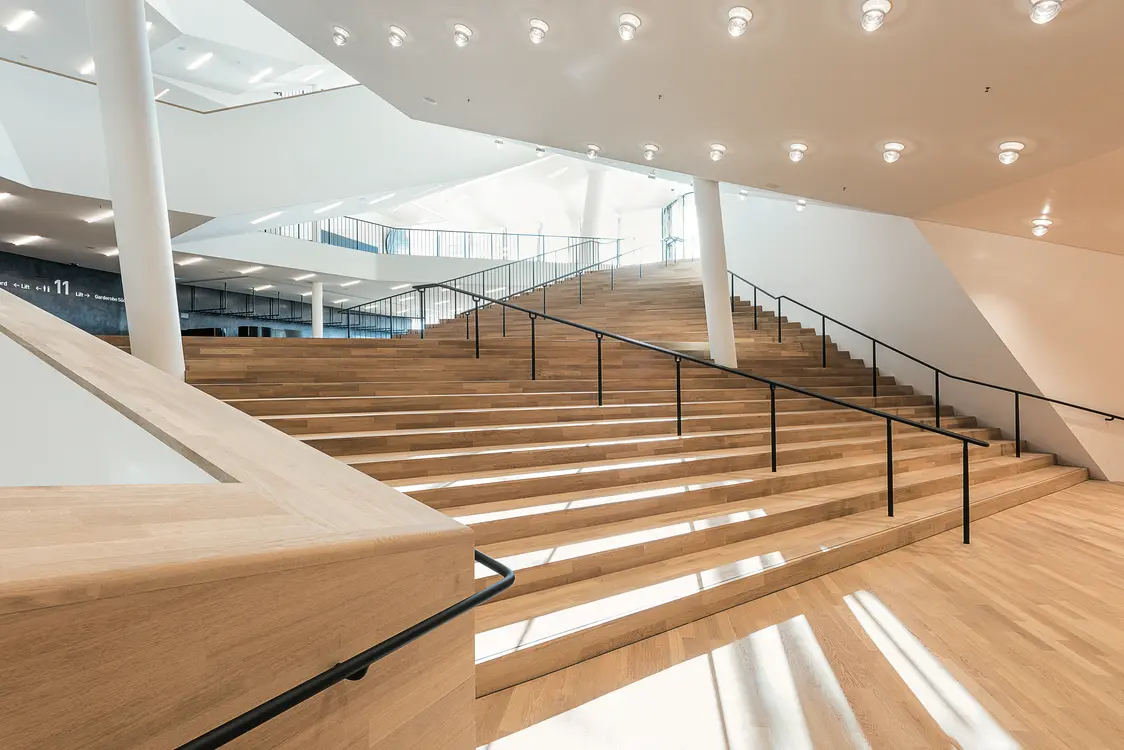
Zumtobel used handmade, state-of-the-art lighting solutions to highlight the radiance of this pioneering concert hall. A special luminaire was also developed specifically for the foyer and cloakroom. It is a hybrid luminaire with a handmade fluorescent tube and an RGB LED module. Using a DALI interface, both components can be controlled independently of the other. While the conventional fluorescent tube provides general illumination, the LED module means that any desired colour can be set based on the event, thereby creating an emotional feature lighting in the area.

''We are delighted to be part of this architectural jewel with our unique lighting solutions – and we can now marvel at the end result”
says Nicole Drong, Head of the Zumtobel Distribution Centre in Hamburg