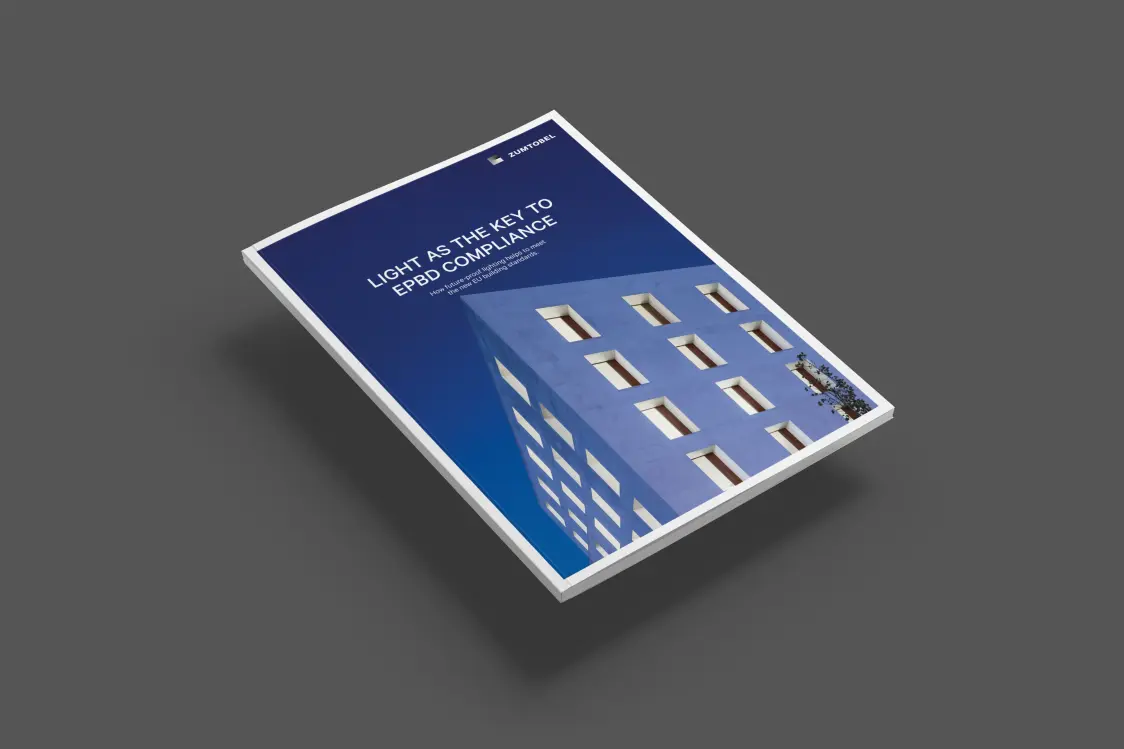
EPBD

EPBD explained
The revised European Buildings Directive (EPBD) is increasingly becoming a reality for many of our partners – and we at Zumtobel are ready to support and guide you formally on this journey. Lighting plays a central role in the EPBD Directive: It helps to meet the requirements for efficiency, intelligent connectivity and automation.


Our objectives for sustainable development
Lighting within the directive

Energy efficiency
– Light that takes responsibility.
Highly efficient LED systems, combined with presence and optional daylight sensors, significantly reduce power consumption. Intelligent zoning means that light is only used where it is really needed — for maximum efficiency with minimal use of resources.
Highly efficient LED systems, combined with presence and optional daylight sensors, significantly reduce power consumption. Intelligent zoning means that light is only used where it is really needed — for maximum efficiency with minimal use of resources.

Control and monitoring
– Light, intelligently designed.
Smart readiness and the integration of demand response functions enable data-driven optimization of lighting. The result is a system that reacts flexibly to energy demand, dynamically controls consumption, and increases the efficiency of the entire building.
Smart readiness and the integration of demand response functions enable data-driven optimization of lighting. The result is a system that reacts flexibly to energy demand, dynamically controls consumption, and increases the efficiency of the entire building.

Human Centric Design
– a key factor for well-being.
From the perspective of Indoor Environmental Quality (IEQ), lighting takes on a new significance: it measurably influences health, comfort, and performance – through optimised light quality, controlled glare, and circadian-supportive lighting design that respects the natural rhythm of individuals and intelligently integrates daylight.
From the perspective of Indoor Environmental Quality (IEQ), lighting takes on a new significance: it measurably influences health, comfort, and performance – through optimised light quality, controlled glare, and circadian-supportive lighting design that respects the natural rhythm of individuals and intelligently integrates daylight.